ZK Series: What is a Hedge Fund?



For many investors, this is the default way of making money. But what happens when the trend reverses? In many cases, those portfolios fall with it. So how can returns still be generated when prices decline?
In this edition of the ZK Series, we take a closer look at what a robust portfolio looks like, and at the strategies that can continue to generate returns even when markets are no longer supportive.

Key takeaways
- A hedge fund is a flexible fund structure. It can use a broad toolkit of strategies and instruments to generate returns, even when markets fall.
- Returns often come from inefficiencies, not just price appreciation. Hedge funds may use long and short positioning, derivatives, and relative value strategies.
- Flexibility requires strong risk management. The opportunity set is wider, but success depends on disciplined execution and robust controls.
What is a hedge fund?
A hedge fund is an investment fund with one defining feature: flexibility. Unlike many traditional funds, which are often mostly long-only, hedge funds can typically deploy a broader range of strategies. This may include combining long and short positions, using derivatives such as futures and options, and exploiting price differences across markets.
The word “hedge” literally means to offset or protect. Hedge funds originally emerged with the idea that you can reduce risk by hedging exposures. Today, the term largely reflects something broader: a fund that has more tools to manage risk and generate returns, especially when markets do not move in a straight line.
How does a hedge fund work?
The core idea is that a hedge fund does not want to rely on a single scenario, such as “the market goes up.” Instead, it aims to generate returns through multiple sources, for example:
- Returns from price appreciation (long)
- Returns from price declines (short)
- Returns from price differences across instruments (arbitrage or basis trades)
- Returns from premium capture or protection through options
- Returns from relative value relationships (pairs trading or spreads)
Because hedge funds can position both with and against markets, they often focus on risk-adjusted performance. Not only how much they earn, but how consistently they earn it.
Common hedge fund strategies
Hedge funds can look very different from one another, but several strategy types are common:
Long and short strategies
A fund goes long assets it finds attractive and shorts assets it finds less attractive. The goal is to profit from relative performance while reducing exposure to broad market moves.
Market-neutral strategies
These strategies aim to neutralize market beta by balancing long and short exposures. Returns are driven by inefficiencies, spreads, or funding rates, not by market direction.
Arbitrage and relative value
This includes price differences between spot and futures (cash and carry), across exchanges, or between closely related assets. The thesis is that mispricings tend to converge over time.
Event-driven or tactical positioning
Some hedge funds trade around specific catalysts, such as listings, upgrades, or regulatory developments, or take tactical exposure when the risk and reward is strongly asymmetric.
A key point is that hedge funds are rarely built around a single tactic. The strength often lies in combining strategies that perform differently across market conditions.
Pros of hedge funds
Below are the most well-known benefits that a hedge fund offers investors.
- More ways to generate returns
With a broader mandate, hedge funds can access opportunities that long-only funds typically cannot. - Less dependence on market direction
Many hedge fund approaches are designed to perform in sideways or declining markets as well. - Focus on risk management and stability
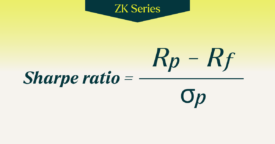
Well-managed hedge funds often prioritize drawdown control, lower volatility, and higher Sharpe ratios. - Portfolio diversification
Because return drivers can differ from traditional long-only exposures, hedge funds may improve overall portfolio balance.